
 Become A Jaguar
 Request Info
 Apply
 Get Game Tickets
Message from the Vice President for Research
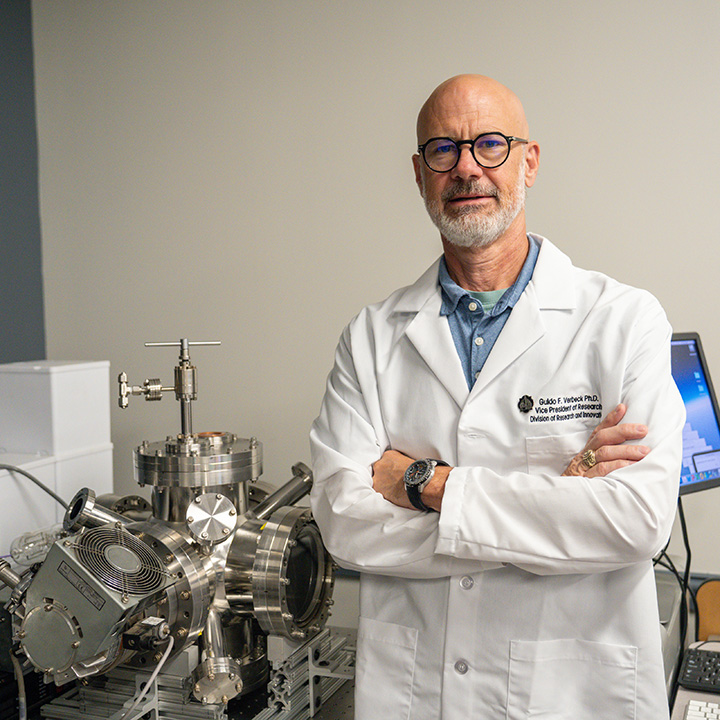 Colleagues and Students, it is a privilege to welcome you into this next chapter of inquiry at Texas A&M University–San Antonio. The Division of Research and Innovation exists to serve you, to clear a path, seed work that is not yet competitive, connect you with community partners and federal program officers, and help results reach students, the literature, and the public good of San Antonio and South Texas. DRI has new initiatives that are built around that service, modest, flexible support placed in the hands of faculty and students already engaged in reciprocal partnership, rigorous scholarship, and mentorship.
This year DRI invites applications for Research Council seed grants and Research Mentoring Grants (up to $10,000; due 6 November 2026), a Junior Faculty Washington, D.C. trip to meet program officers (due 6 November 2026), Faculty Community Engagement Awards of $4,000 for projects conducted with local partners from 1 January through 15 August, a rolling Faculty Publication Fees Grant of up to $2,000, Undergraduate Student Innovation Awards of up to $2,500, and two annual cycles of Undergraduate and Graduate Research Travel Grants. Guidelines and forms are available from the Division; questions may downloaded and then sent to DRI@tamusa.edu. I look forward to your proposals, to your presentations at JAG RISE, and to walking with you as we build a research culture worthy of our students and our city.
Research Initiatives
Faculty Publication Fees Grant (FY 2027, rolling)
This form is the application for a last-dollar award of up to $2,000 per accepted work (one request per faculty member per fiscal year) to offset bona fide article processing charges, peer-reviewed book or chapter fees, or comparable publisher invoices after acceptance. Full-time TAMUSA faculty who will list a TAMUSA affiliation on the published work may apply; library transformative or read-and-publish agreements must be used first, and predatory, deceptive, hijacked, or pay-to-publish venues without independent peer review are ineligible. The packet captures venue and invoice details, authorship, a short justification of scholarly contribution and institutional return, open-access and repository commitments, chair endorsement, and evidence of acceptance and review. Payment is made to the publisher or reimbursed against a paid invoice; awardees must deposit the accepted manuscript or version of record in the TAMUSA institutional repository and file a close-out within 30 days of payment or publication.
Junior Faculty DC Trip Grant (Fall 2026 competition)
This application funds eight junior faculty traveler (assistant professor, or within six years of a first tenure-track or equivalent appointment) plus two faculty mentors for a 4 night Washington, D.C. in the summer, with a $2,000 cap on traveler costs (airfare, lodging at federal per diem, M&IE, local transit, and leave-behind printing). Mentor travel is funded separately by DRI and is not charged to the award. The purpose is structured engagement with federal program officers and University Government Relations, not lobbying. Required products include a briefing packet and one-pagers, documented PO and GovRel meetings, daily debrief notes, a post-trip action plan, a JAG RISE-style presentation, and a final report within 30 days of return. The form records the trip focus, agency roster, mentoring compact, current and pending support, and a line-item budget; the packet also requires a two-page trip-and-mentoring narrative, CVs, and a budget narrative citing GSA rates. Applications are due 6 November 2026.
Research Council Grants (Fall 2026 competition)
This is the seed-grant application for tenured or tenure-track faculty at assistant professor or above, awarding up to $10,000 for research, scholarship, or creative work between 1 January and 15 August 2027. The program is intended to generate results that strengthen later external proposals. PIs may hold no more than one Research Council awards in any three-year window and may not hold an active award at the time of application. Allowable costs include limited PI summer salary (two weeks plus fringe), student assistants, supplies, project-essential equipment retained at TAMUSA, computing with IT approval, project travel (not conference presentation), and participant support; academic-year salary, publication fees, and conference travel are excluded. The packet includes eligibility and compliance checklists, chair endorsement, current and pending internal and external support, a budget table, a four-page detailed plan (goals, background, significance, methods, timeline), a budget justification, abbreviated CVs, and letters of support. Awardees present at a public forum such as JAG RISE and file a final report within 45 days of project end. Grant submission are also required within the following fiscal year. Applications are due 6 November 2026.
Research Mentoring Grant (Fall 2026 competition)
This form pairs one TAMUSA faculty mentee (fiscal PI) with one faculty mentor to produce preliminary data and a submitted or submission-ready external proposal by 15 August 2027, with a $10,000 cap. The mentee must be full-time faculty seeking structured mentoring in a line of work that is new to the mentee, new to campus, or not yet competitive; the mentor must have a relevant external-funding record and commit to a written plan with at least monthly meetings and co-review of the external proposal. A department chair may serve as mentor only on the basis of scholarly expertise, not supervisory role. Allowable costs track the Research Council pattern (limited mentee summer salary, student help, prelim-data supplies and core fees, minor equipment, essential travel, proposal-development costs) and explicitly exclude mentor honoraria. The application records the target sponsor and mechanism, mentoring cadence, milestone table, current and pending support, and budget; attachments include a three-page project-and-mentoring narrative, a one-page aims or project summary in the sponsor’s format, CVs, and a two-page budget narrative. Required close-out is a prelim-data package, the external proposal (or submission-ready PDF), a mentoring reflection, and a final report within 45 days of 15 August 2027. Due 6 November 2026.
Undergraduate / Graduate Research Travel Grant (two cycles per year)
This reimbursement award supports enrolled TAMUSA undergraduate or graduate students who have an accepted oral presentation, poster, panel, performance, or exhibit at a national or international conference (not a local campus symposium or purely regional student meeting). Caps are $750 domestic and $1,500 international. The student must be a presenting author on original work completed at TAMUSA under a named faculty mentor, remain enrolled through the meeting dates (or travel immediately after conferral with written approval), and meet typical GPA floors (2.50 undergraduate, 3.00 graduate). Cycle 1 covers conferences 1 January–30 June (deadline 15 December); Cycle 2 covers 1 July–31 December (deadline 15 June). Allowable costs include student-rate registration, coach airfare or mileage, lodging at or below GSA or University cap, ground transit, per diem, poster printing, and required visas or insurance. Faculty travel is not charged to the award. The packet includes acceptance documentation, the official abstract, a one-page student narrative, a budget narrative with quotes, a short student CV, and mentor plus chair endorsements. After travel, the student files slides or poster, itemized receipts, and a one-page report signed by the mentor within 21 days of return.
Undergraduate Student Innovation Award (Academic Year 2026–2027)
USIA is a DRI-led seed award of up to $2,500 for two undergraduate project lead or a team of up to four, covering faculty-mentored research, creative or scholarly work, design or prototype development, social or commercial ventures, or community-engaged projects over a period of up to 12 months from award notice. Stipends and tuition are not allowed; allowable costs are supplies, minor equipment and software, core-lab or analytical services, project-essential travel, and IRB-approved participant incentives. The student lead must be a currently enrolled TAMUSA undergraduate in good academic and conduct standing and must be the primary author of a two-page white paper (Introduction, Relevance, Procedure, Budget, Mitigation). A TAMUSA faculty mentor confirms feasibility, supervision, and access to space or equipment. The form captures team members, a 150-word abstract, compliance and risk flags, a budget summary that must match the white paper, and dual student–mentor signatures. Awardees submit a one-page final report and present at RISE or another DRI-designated venue. Packets are emailed as a single PDF to DRI with the mentor copied.
Community Engagement Award Application
The Division of Research and Innovation at Texas A&M University–San Antonio invites faculty to apply for a new Community Engagement Award of $4,000 supporting projects conducted during the annual award period of January 1 through August 15. This initiative funds faculty-led research, scholarship, and creative activity carried out in reciprocal partnership with community organizations, agencies, schools, or residents so that university expertise and community knowledge are exchanged for mutual benefit, addressing locally identified needs, enriching teaching and student learning, and contributing to the public good in San Antonio and the surrounding region. Eligible full-time faculty may submit a concise proposal describing the partnership, shared goals, methods, budget, and expected scholarly and community outcomes; awards are intended to seed or sustain engaged work that can lead to publications, external proposals, and lasting campus–community collaboration. Awardees will present results at a DRI-designated forum such as JAG RISE and file a brief final report within 45 days of August 15. For guidelines and the application, contact DRI@tamusa.edu.